Downloads
DOI:
https://doi.org/10.58981/bluepapers.2026.2.pref3Published
Issue
Section
License
Copyright (c) 2026 Jyoti Hosagrahar

This work is licensed under a Creative Commons Attribution 4.0 International License.
How to Cite
Abstract
UNESCO was pleased to partner with the UNESCO Chair on Water, Ports and Historic Cities and its Chairholder Prof. Carola Hein, the Institut d’études avancées de Paris, and Sorbonne Université to organize a conference, “(Re)connecting Rivers and Cities” in 2025. It is fitting that the conference was organized in Paris, a city whose identity has been shaped by its river, the Seine. Recognized as a UNESCO World Heritage property, “Paris, the Banks of the Seine” is inscribed on the UNESCO World Heritage List and offers a powerful example of an extraordinary city that has developed around the river, embracing it at its center as an essential aspect of its urban character, its form, its sustenance, its social life and its environmental and visual benefits. This approach is at the heart of the UNESCO 2011 Recommendation on the Historic Urban Landscape (HUL Recommendation), an important instrument that advocates for strengthening the vital connections between the built environment, natural surroundings, and local communities.
In 2011, after six years of development, 194 member states of UNESCO adopted the HUL Recommendation as a way of understanding the built heritage as a landscape, for identifying, conserving and managing heritage. The HUL Recommendation approach proposes the integration of heritage conservation with urban development plans and processes to manage and to protect heritage values. As such, it advocates for reinforcing the connections between built heritage, the natural environment and the local communities, their practices and knowledges in a framework of sustainable development fostering cities where heritage is protected, and all inhabitants can thrive.
Climate change is one of the most significant threats to world heritage properties today, including to their integrity, their authenticity and to their local communities who are limited in their abilities to meet their needs for their economic and social development. The global assessment of UNESCO-designated sites, People and Nature in UNESCO-designated sites, indicates that nearly 90 per cent of World Heritage sites are already exposed to high levels of environmental stress, while the number of sites affected by climate-related hazards has increased by 40 per cent since 2015. Projections further indicate that the number of sites facing additional climate-related pressures could triple by 2050.
UNESCO’s efforts to address, avert and minimize climate risks to World Heritage include a wide range of actions, from reinforcing protection with customized local strategies, to emergency response, and implementation of the 2023 Policy Document on Climate Action for World Heritage adopted by the General Assembly of States Parties to the Convention. The Policy Document provides an outcome-oriented framework for goals and targets at national and heritage site levels to galvanize urgent action, including the updating of national heritage management tools and action plans, integrating adaptation and mitigation strategies, and facilitating continuous monitoring and assessment.
As we face the growing challenges of climate change, we are reminded that water — whether in excess or scarcity — poses significant threats to these invaluable sites. From rising sea levels to changing rainfall patterns, we must recognize the urgent need to protect our shared heritage through climate adaptation, water management, and sustainable conservation. Throughout history, communities worldwide have developed ingenious hydraulic engineering and sustainable water management practices. UNESCO World Heritage Canopy platform showcases these efforts — from the Water Management System of Augsburg in Germany to ancient aqueducts, cisterns and canals that reflect conservation, reuse, and rainwater harvesting principles. The M’zab Valley in Algeria developed temporary structures for flood-prone areas, emphasizing risk prevention — and the abandonment of such practices has increased vulnerability to flooding.
Water has always been essential to life — sustaining both biological and cultural diversity. Across time, it has played a foundational role in shaping civilizations, guiding settlements, and fostering the cultures that we celebrate today. A large number of properties inscribed on the World Heritage List have hydraulic elements or include water-/river-scapes, reflecting intrinsic linkages between water and culture over thousands of years. The Grand Canal, in China, the world’s longest and oldest canal, has supported China’s economic prosperity for centuries and continues to play a key role in internal communication. And the Mount Qingcheng and the Dujiangyan Irrigation System on the Minjiang River, the world’s only surviving dam-free irrigation system, remains in use after more than 2,250 years as an excellent “nature-positive” model.
Water is a key element to the protection of heritage. A holistic perspective is needed that includes many different levels from planning to people and practice to make a place and its heritage meaningful, with a focus on conditions of authenticity and integrity, on local practices and traditions, and the ordinary built fabric. Protecting heritage from a water perspective, as water-related heritage, or as heritage under threat of water-related climate change requires novel approaches. The World Heritage Center has developed several important tools, the Urban Heritage Atlas, which includes a careful study of the Banks of the Seine, the Canopy, which provides insight into successful examples of heritage protection in the context of sustainable development and the forthcoming publication of a guide on managing heritage in urban contexts.
As many cities around the world seek to reconnect with their own waterways, Paris provides some valuable lessons. Through public spaces that invite people back to the river and initiatives that seek a greener, more pedestrianized Place de la Concorde, the city continues to innovate while honoring its past. Notre-Dame is a shining example of what the World Heritage Convention represents — Outstanding Universal Value in historical, architectural, spiritual and cultural terms.
Its restoration embodies the core of UNESCO’s mission to protect and preserve our world’s heritage, ensuring that future generations can connect with them and continue to benefit from their connections to the river and to water – helping to counter the challenges posed by climate change and urban pressures. Notre-Dame is a testament to what we can achieve when we work collectively to preserve the past while embracing the future.
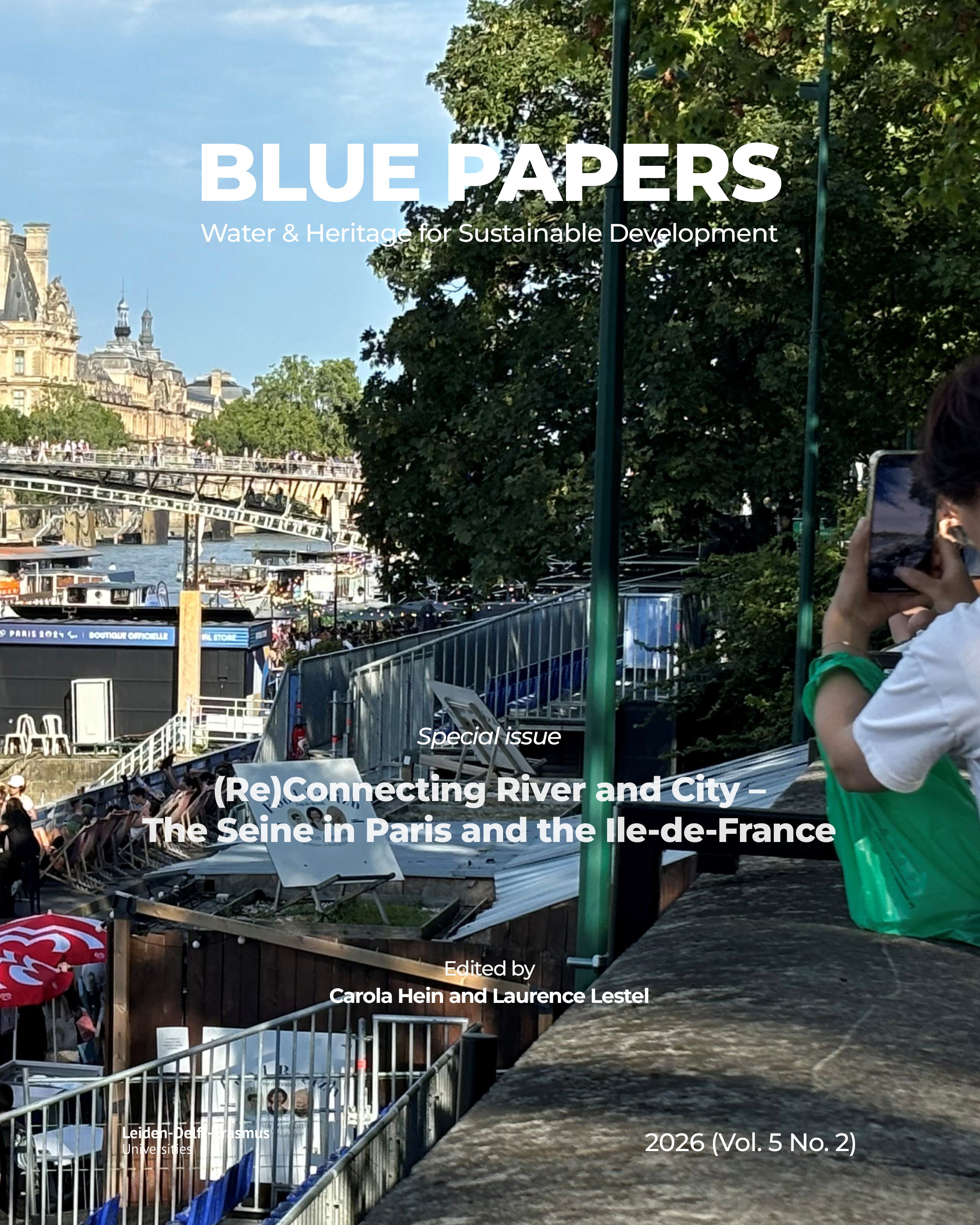
This special issue of the open-access peer-reviewed journal Blue Papers with a focus on the Seine in Paris and the Île-de-France provides important insights into the multiple dimensions of water heritage and their respective roles by linking water and heritage in a comprehensive way and by providing new tools and insight for protecting heritage.


