Downloads
DOI:
https://doi.org/10.58981/bluepapers.2026.2.pref1Published
Issue
Section
License
Copyright (c) 2026 Pierre Rabadan

This work is licensed under a Creative Commons Attribution 4.0 International License.
How to Cite
Abstract
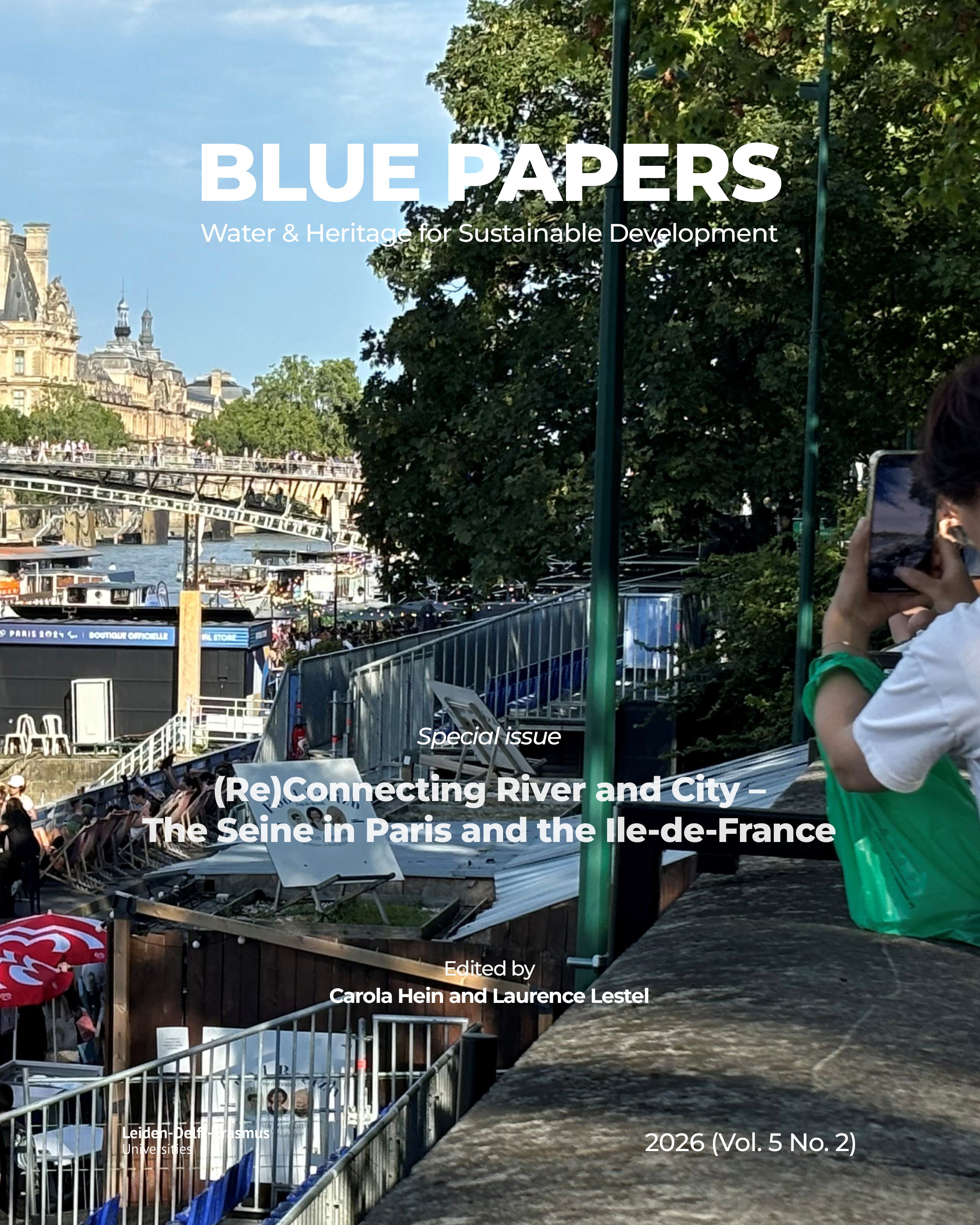
As Paris continues to transform, the Seine appears more than ever as the guiding thread of its history and future. The river structures the city’s geography, anchors its heritage and nourishes our imagination. Yet, over the decades, the bond between city and river has at times weakened, as if the intensity of urban life had relegated the Seine to the background. The 2024 Olympic and Paralympic Games offered a historic opportunity to renew this essential connection through an ambitious commitment to environmental restoration and social renewal. By placing the Seine at the heart of the opening ceremony and several competition events, the city restored the river to its central place in Parisian life – a legacy intended to endure well beyond the Games. This vision forms part of a long-term transformation aimed at reconnecting the city with its natural environment, reinventing the use of public space and opening new horizons for residents and visitors alike.
The pedestrianization of the riverbanks, the improvement of water quality and the creation of new areas for walking and relaxation all contribute to a single ambition: to make the river a vibrant, shared space. The return of swimming in the Seine, made possible by significant investments, symbolizes this collective reclaiming. Meeting this challenge in record time allowed 100,000 people to enjoy three designated swimming areas in Paris during the summer of 2025. This milestone has acted as a powerful catalyst, with 85 per cent of swimmers reporting a more positive perception of the river after their experience.1 Yet swimming is ultimately the visible outcome of a broader ecological effort focused on ecosystem restoration, pollution reduction and climate adaptation. Flowing through diverse territories, the Seine connects cities, landscapes and ecosystems far beyond the boundaries of Paris. Ensuring its ecological continuity therefore requires close cooperation along the entire river, from upstream to downstream, to foster a shared vision of the Seine as a common good. Such a collective approach is essential to maintaining, over the long term, a balance between urban uses, environmental imperatives and the preservation of the river heritage that shapes the identity of Paris and the entire Seine Valley.
Reconnecting Paris to its river also means reconnecting with a memory and a heritage that have always been the soul of the capital. The city’s bridges, quays, monuments and river landscapes form a unique ensemble, appropriately recognized by UNESCO as World Heritage property. Rethinking how the river is used is a way to preserve and enhance this heritage.
This issue of Blue Papers therefore invites readers to reflect on a city in the wake of a historic moment, where water is once again becoming a structuring force in urban life and cultural identity. May the analyses gathered in these pages stimulate reflection and inspire public policies that, in the years ahead, will continue to bring Paris closer to its river and thus ensure the preservation of both for generations to come.


