
Downloads
DOI:
https://doi.org/10.58981/cencx495Published
Issue
Section
License
Copyright (c) 2025 Tino Mager

This work is licensed under a Creative Commons Attribution 4.0 International License.
How to Cite
Keywords:
swimming, rivers, water quality, urban heritage, waterfrontsAbstract
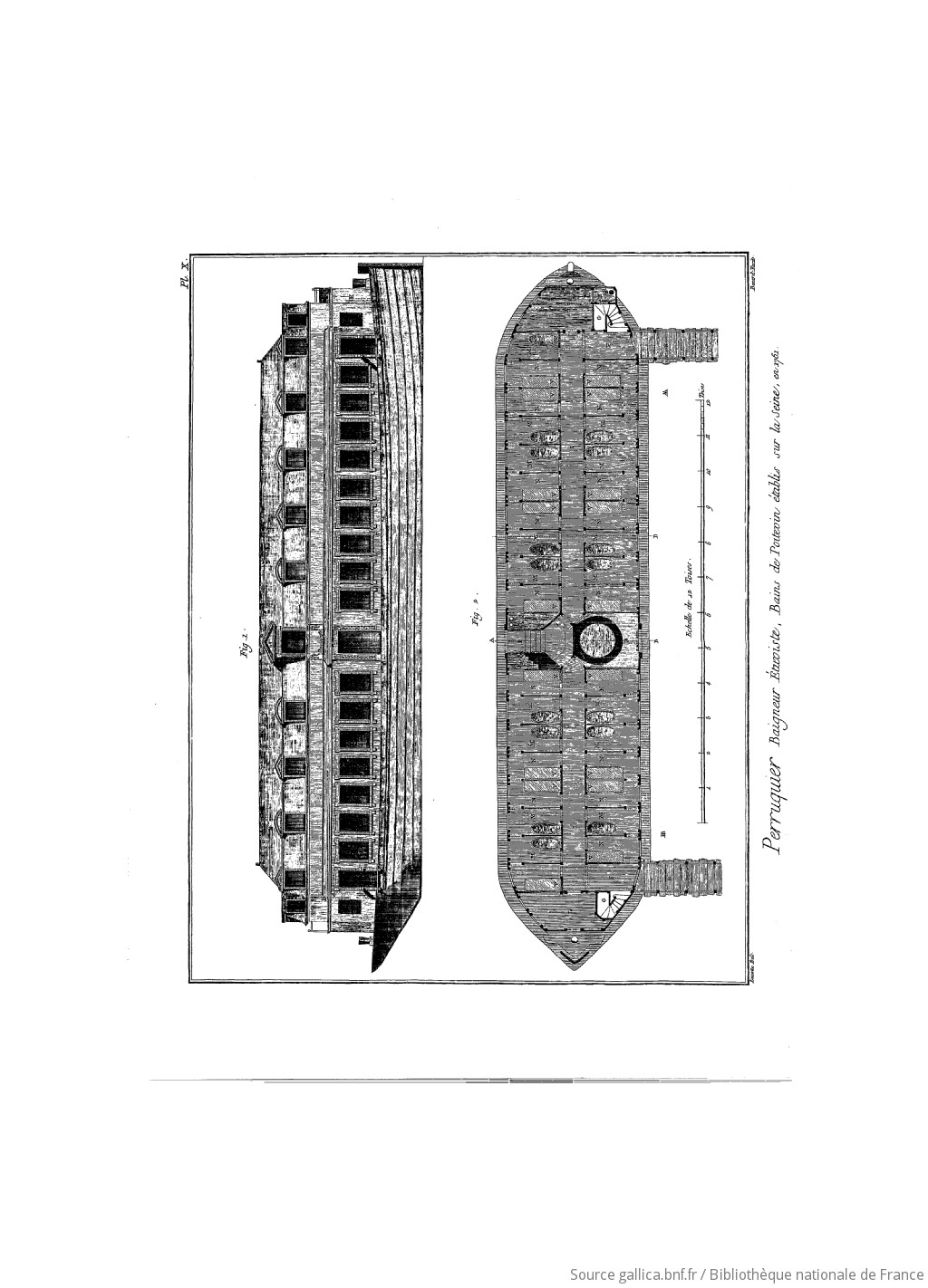
Urban river swimming is a centuries-old practice that embodies both tangible and intangible cultural heritage. Historically, many rivers served as important public spaces for hygiene, leisure and social interaction and were deeply embedded in urban life before industrialization, pollution and privatization restricted access. Recorded in ancient depictions, medieval manuscripts or illustrations of floating bathhouses from the eighteenth century, swimming and bathing in rivers reflects evolving social norms, urban development and innovations in water management. It connects communities to the environmental roots of their cities and fosters a sense of shared identity and memory. As today’s cities seek cleaner, more inclusive public spaces, recognizing and revitalizing this heritage offers a sustainable way to reconnect urban populations with natural waterways, enriching public life and re-imagining riverfronts as accessible, healthy and culturally resonant environments.
References
Billard, Brigitte. 2016. “B comme Bains” [B as in baths]. https://www.chroniquesdantan.com/recherches-genealogiques/les-gens/anecdotes/b-comme-bains.
Boccace. n.d. Decameron [The Decameron]. Paris: BnF, Département des Manuscrits, Français 14, fol. 21. https://classes.bnf.fr/ema/grands/001.htm.
British Museum. n.d. “Westminster Embankment and Floating Bath.” https://www.britishmuseum.org/collection/object/P_1978-U-3515.
Digby, Everard. 1595. A Short Introduction for to Learne to Swimme. Translated by Christofer Middleton. http://name.umdl.umich.edu/A20436.0001.001.
Florian, Maria-Cristina. 2024. “Public Pools as Public Spaces: The Role of Swimming and Bathing in Cities.” ArchDaily, August 15. https://www.archdaily.com/1002494/public-pools-as-public-spaces-the-role-of-swimming-and-bathing-in-cities.
Gemeente Rotterdam. n.d. “Zwemmen in Open Water” [Swimming in open water]. https://www.rotterdam.nl/zwemmen-in-open-water.
Grattan, John P., Russell B. Adams, Hannah Friedman, David D. Gilbertson, Keith Haylock, Christopher O. Hunt and Martin Kent. 2016. “The First Polluted River? Repeated Copper Contamination of Fluvial Sediments Associated with Late Neolithic Human Activity in Southern Jordan.” Science of the Total Environment 573: 247–57. https://doi.org/10.1016/j.scitotenv.2016.08.106.
Horace. n.d. The Satires, Book 2, Satire 1, Line 8. https://www.poetryintranslation.com/PITBR/Latin/HoraceSatiresBkIISatI.php.
Outdoor Swimmer. 2022. “River Thames: The Wet, Windy History.” Outdoor Swimmer, April 24. https://outdoorswimmer.com/featured/river-thames-the-wet-windy-history.
Polo, Marco. n.d. The Travels of Marco Polo. https://gallica.bnf.fr/ark:/12148/btv1b52000858n/f264.item.
Varanasi Heritage Dossier. n.d. “Manikarnika Ghat.” Last modified March 24, 2025. https://en.wikiversity.org/w/index.php?title=The_Varanasi_Heritage_Dossier/Manikarnika_Ghat&oldid=1215907.


