Downloads
DOI:
https://doi.org/10.58981/bluepapers.2026.2.04Published
Issue
Section
License
Copyright (c) 2026 Raphaël Morera

This work is licensed under a Creative Commons Attribution 4.0 International License.
How to Cite
Keywords:
Seine River, water governance, inland navigation, urban history, water managementAbstract
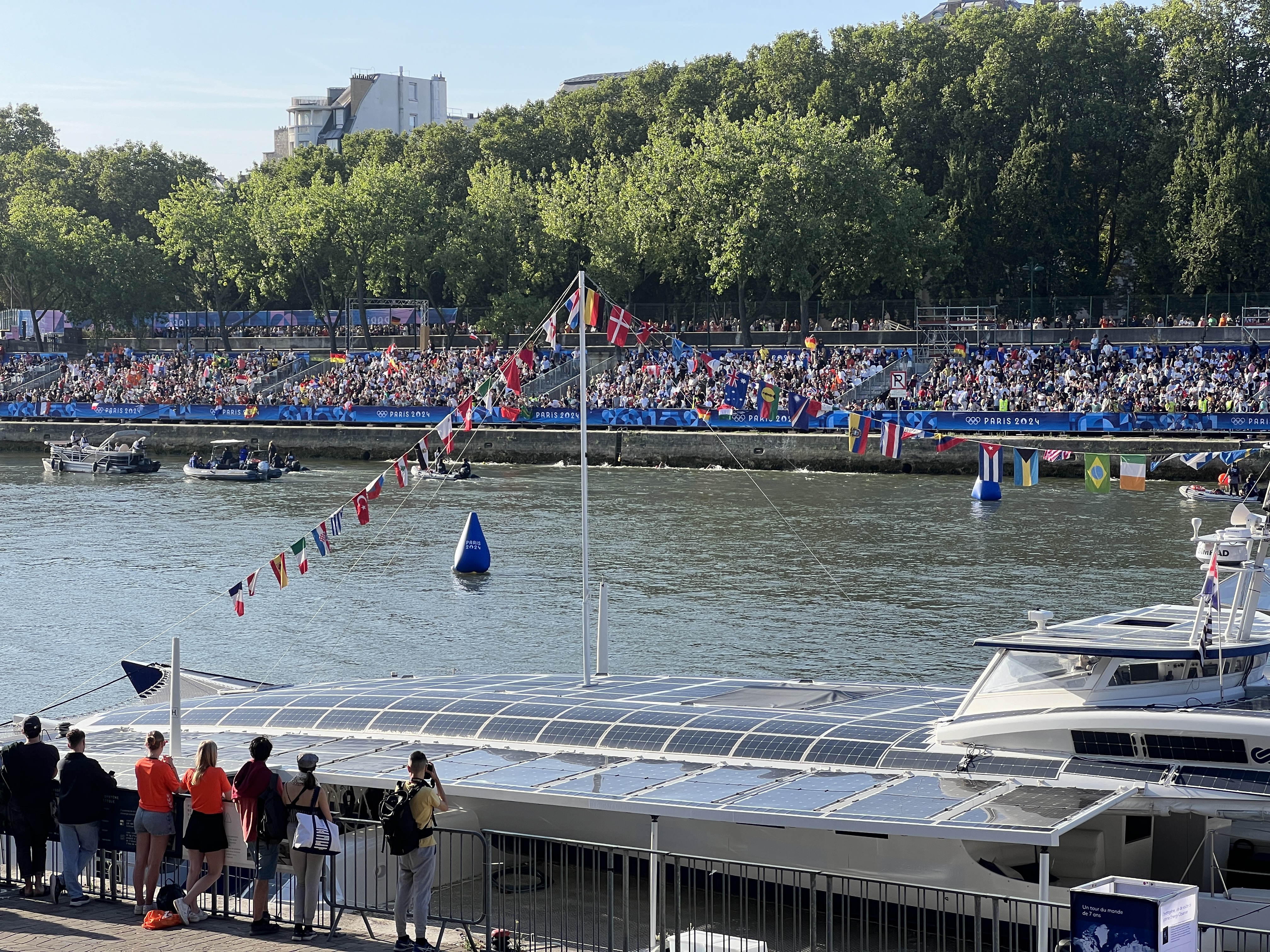
The image of Paris is closely linked to that of the Seine, the river that flows through it and around which the city developed. The opening ceremony of the 2024 Olympic Games clearly highlighted this association. This article traces the history of this relationship over the centuries. It first describes the role of the Seine and its watershed in the growth of the city, then unravels the history of the river in the city itself before showing how, ultimately, Paris shaped the history of the Seine.
References
Backouche, Isabelle. 2000. La trace du fleuve: La Seine et Paris, 1750–1850 [The trace of the river: The Seine and Paris, 1750–1850]. Paris: Éditions de l’EHESS.
Benoit, Paul. 2000. “Ports et quais” [Ports and quays]. In La Seine et Paris [The Seine and Paris], edited by Béatrice de Andia. Action artistique de la Ville de Paris.
In the Seine: Objects Found From Préhistory to the Present Day. 2024. Archaeological Crypt of Paris.
Delagrive, Jean. 1736. Description du cours de la Seine & des rivières et ruisseaux y affluans dont les cartes ont été levées sur les lieux par ordre de M. Le Président Turgot Prévot des marchands [Description of the course of the Seine and its tributary rivers and streams, whose maps were surveyed on site by order of M. le Président Turgot, Provost of the Merchants]. Paris.
Font-Réaulx, Constance de. 2019. “From Water Carrier to Water Consumer.” Histoire & Mesure 34 (2): 31–66.
Gély, Jean-Pierre. 2014. “Du centre carrier au centre urbain, stratégie d’approvisionnement en pierres d’appareil des chantiers de construction: l’exemple du Bassin parisien” [From quarrying center to urban center: Building-stone supply strategies for construction sites: The example of the Paris Basin]. In Construire la ville: Histoire urbaine de la pierre à bâtir [Building the city: An urban history of building stone], edited by François Blary and Jean-Pierre Gély. Paris: Éditions du CTHS.
Le Maresquier-Kesteloot, Yvonne-Hélène. 2000. “La Hanse des marchands de l’eau” [The Hanse of water merchants]. In La Seine et Paris [The Seine and Paris], edited by Béatrice de Andia. Action artistique de la Ville de Paris.
Le Roux, Thomas, and Raphaël Morera. 2018. “Blanchisseuses du propre, blanchisseurs du pur: Les mutations genrées de l’art du linge à l’âge des révolutions textiles et chimiques, 1750–1820” [Washerwomen of cleanliness, washers of purity: Gendered transformations in the art of laundry in the age of textile and chemical revolutions, 1750–1820]. Genre et histoire 22.
Lyon-Caen, Nicolas, and Raphaël Morera. 2020. À vos poubelles citoyens! Environnement urbain, salubrité publique et investissement civique [To your bins, citizens! Urban environment, public health and civic investment]. Champ Vallon.


