Downloads
DOI:
https://doi.org/10.58981/ykkesw90Published
Issue
Section
License
Copyright (c) 2025 Kasper Lendering, Dimitri Schreuder

This work is licensed under a Creative Commons Attribution 4.0 International License.
How to Cite
Keywords:
water heritage, climate adaptation, groundwater replenishment, water retention, flood managementAbstract
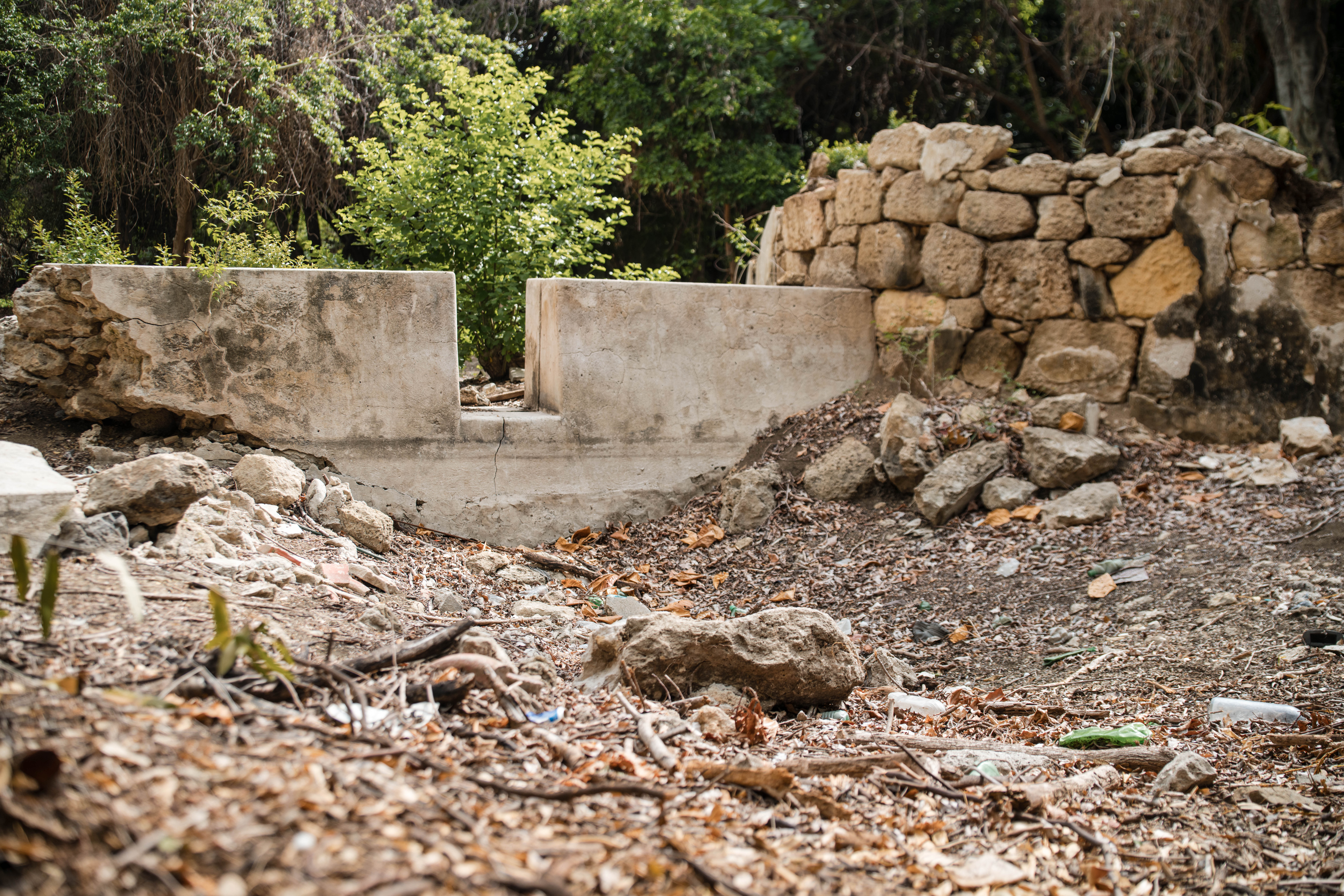
Historic water systems should be recognized not only as cultural heritage but as active assets for climate adaptation. The case of Hòfi Rooi Catootje in Curaçao illustrates how the restoration of earthen dams and spillways can contribute to contemporary water management by reducing flash flood risk, supporting groundwater recharge and creating cooler green spaces in urbanized areas. This integrated approach connects directly to the UN 2030 Agenda, advancing sustainable water management (SDG 6), resilient cities and heritage protection (SDG 11) and climate action (SDG 13). By combining historical cartography, hydrological modeling and community engagement, the project demonstrates how heritage landscapes can be mobilized as nature-based solutions. The lessons extend beyond Curaçao, offering a transferable model for other heritage sites where neglected water systems hold potential for sustainable development and climate resilience in the decades ahead.
References
Beautiful Curacao. 2024. “Landhuis Bloemhof.” Beautiful Curacao, May 30. https://www.beautiful-curacao.nl/bezienswaardigheden/landhuis-bloemhof.php.
Beijering, J. 1950. “Het Vraagstuk van het Behoud van Water op Curaçao” [The issue of water conservation on Curaçao]. Nieuwe West-Indische Gids 31, 65–79.
Buurt, Gerard van. 2022. Water Conservation in Curaçao: Using Traditional Earthen Dams. Updated report. https://werkgroepcaraibischeletteren.nl/water-conservation-in-curacao/.
Central Bureau of Statistics Curaçao. 2018. Curaçao Environmental Statistics Compendium 2016. Willemstad: Central Bureau of Statistics Curaçao. https://digitallibrary.cbs.cw/CBS0000481/00004.
Curacao History. n.d. “The Arrival of the Oil Refinery.” Accessed September 23, 2025. https://www.curacaohistory.com/detail/1918-the-arrival-of-the-oil-refinery.
“Bespreking van: De Waterhuishouding van Curaçao en Aruba, door Prof. W. F. J. M. Krul en Medewerkers” [Review of: The water management of Curaçao and Aruba, by Prof. W. F. J. M. Krul and colleagues]. 1949. West-Indische Gids 31, 21–42.
Krul, W. F. J. M., W. C. Visser and G. Santing. 1949. Rapport inzake de Waterhuishouding van Curaçao en Aruba [Report on the water management of Curaçao and Aruba]. ’s-Gravenhage: Rijksinstituut voor Drinkwatervoorziening.
Loen, Suzanne. 2021. “Thirsty Cities: Shared Water Heritage in the Small Island States of the Dutch Caribbean.” In LDE Heritage Conference on Heritage and the Sustainable Development Goals: Proceedings, edited by Uta Pottgiesser, Sandra Fatorić, Carola M. Hein, Erik de Maaker and Ana Pereira Roders, 370–96. Delft: TU Delft.
Meeteren, N. van. 1945. “Watervoorziening en Grondwaterpeil op Curaçao” [Water supply and groundwater level on Curaçao]. Lux. Jaargang 3, 77. https://www.dbnl.org/tekst/_lux001194501_01/_lux001194501_01_0013.php.
Meeteren, N. van. 1949. “Grondwaterpeil en Watervoorziening op Curaçao, Voorheen en Thans” [Groundwater level and water supply on Curaçao, formerly and now]. West-Indische Gids 30(1), 217–36.


