Downloads
DOI:
https://doi.org/10.58981/0jk28z03Published
Issue
Section
License
Copyright (c) 2025 Nkosinathi Muyambo, Leonard Chitongo, Philani Mlilo, Francis Muromo

This work is licensed under a Creative Commons Attribution 4.0 International License.
How to Cite
Keywords:
socio-ecological well-being, traditional (river) knowledge, damming / de-damming, water resource management, sustainable developmentAbstract
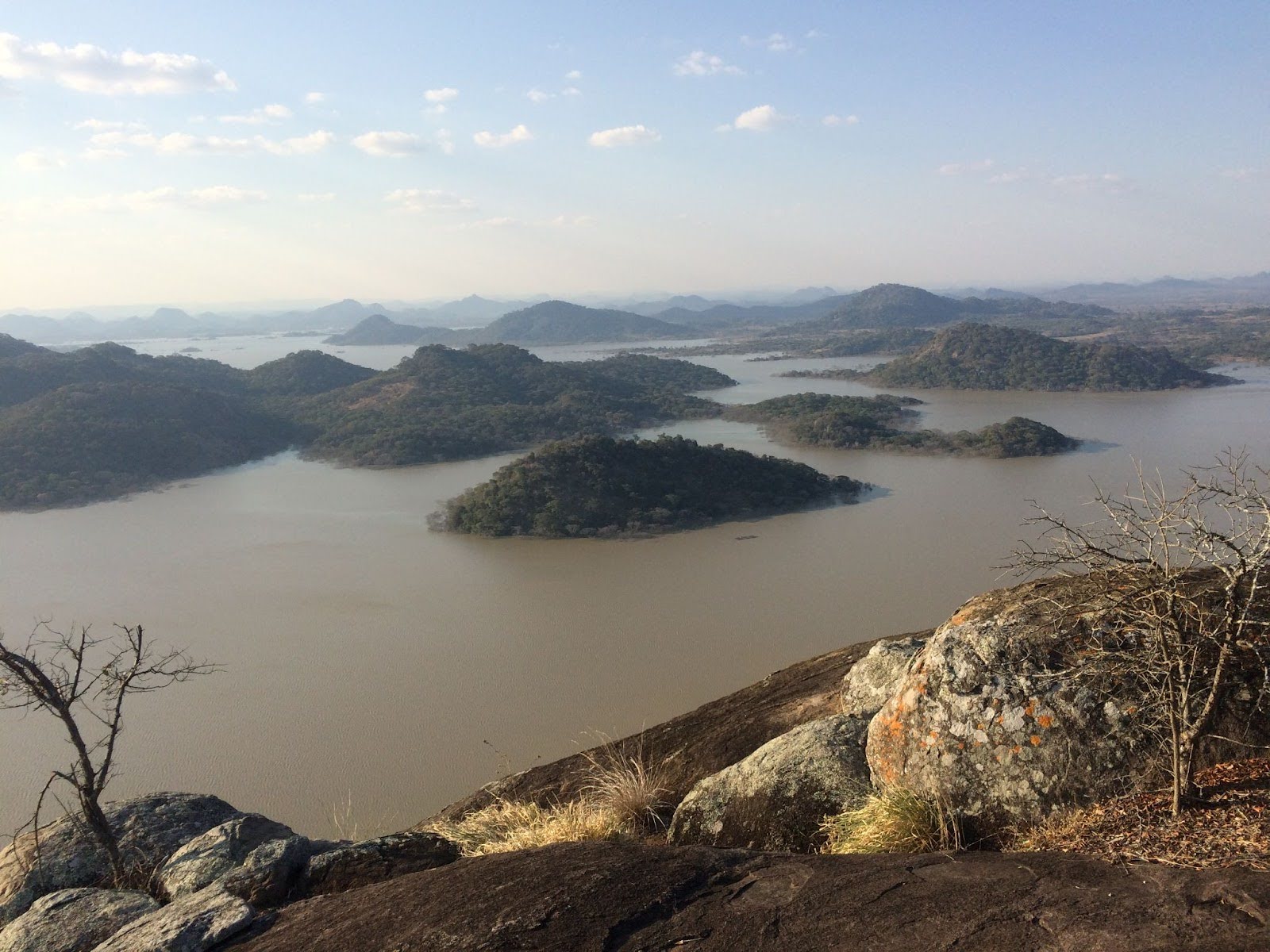
This study examines the socio-ecological impacts of the Tugwi-Mukosi Dam on rural communities in Masvingo South, Zimbabwe, focusing on how dam construction has disrupted and “silenced” traditional water resource values, undermining socio-ecological well-being. Taking a critical community psychology approach, it highlights how ignoring rivers’ roles as heritage sites hampers collaborative water management and sustainable development. Using qualitative data from interviews with locals and stakeholders, the study shows how the dam exacerbates social inequalities and heritage decay. It calls for integrating local values into dam planning to honor rivers’ cultural significance. By addressing opposition to the dam and prioritizing community engagement, the research advocates for transformative water management that respects heritage and fosters socio-ecological well-being.
References
Arcidiacono, Caterina, and Salvatore Di Martino. 2016. “A critical analysis of happiness and well-being. Where we stand now, where we need to go.” Community Psychology in Global Perspective - Special Issue: Happiness and Social Well-Being 2, no. 1: 6–35. http://siba- ese.unile.it/index.php/cpgp/issue/view/1317.
Bond, Patrick, and Masimba Manyanya. 2002. Zimbabwe’s Plundered Environment. African World Press.
Boelens, Rutgerd, Jaime Hoogesteger, Erik Swyngedouw, Jeroen Vos and Philippus Wester. 2016. “Hydrosocial Territories: A Political Ecology Perspective.” Water International 41, no. 1: 1–14. https://doi.org/10.1080/02508060.2016.1134898.
Chazireni, Evans, and Tanyaradzwa Chigonda. 2018. “The Socio-Economic Impacts of Dam Construction: A Case of Tokwe Mukosi in Masvingo Province, Zimbabwe.” European Journal of Social Sciences Studies 3, no. 2. https://doi.org/10.46827/ejsss.v0i0.424.
Chendume, Piwai, and Kudzayi Savious Tarisayi. 2023. “Being Sacrificed in the Name of Development: A Case of Social Distress Caused by the Tokwe-Mukosi Dam.” Interdisciplinary Journal of Sociality Studies 3: 1–9. https://doi.org/10.38140/ijss-2023.vol3.01.
Dams, W.C.O. 2000. Dams and Development: A New Framework for Decision-making - The Report of the World Commission on Dams (1st ed.). Routledge. https://doi.org/10.4324/9781315541518.
Goldsmith, Edward, and Nicholas Hildyard. 1984. The Social and Environmental Effects of Large Dams. Wadebridge, Cornwall: Wadebridge Ecological Centre.
IHA (International Hydropower Association). 2011. Hydropower Sustainability Assessment Protocol. Accessed June 17, 2026. https://www.hydropower.org/publications/hydropower-sustainability-assessment-protocol.
Mapuranga, Vimbai. 2016. “The Tokwe-Mukosi Dam Disaster, Forced Relocations and Effects on Livelihoods in Chingwizi, Zimbabwe.” Master’s thesis, University of Johannesburg.
Martinez-Santos, Pedro, Maite M. Aldaya and M. Ramón Llamas, eds. 2014. Integrated Water Resources Management in the 21st Century: Revisiting the Paradigm. London: CRC Press. https://doi.org/10.1201/b16591.
Matunhu, Jephias. 2021. “Tugwi Mukosi Dam Construction: Consequences to Affected Local Communities in Zimbabwe.” Journal of Environmental Studies 25, no. 1: 57–61. https://doi.org/10.21608/jesj.2021.229005.
Mudefi, Elmon, Alice Stella Kwizera and Wilson Akpan. 2025. “Displacement by Design? Short- to Medium-Term Effectiveness of Zimbabwe’s 2014 Tugwi-Mukosi Resettlement Plan and Management.” Sustainable Futures 10: 101328. https://doi.org/10.1016/j.sftr.2025.101328.
Mudzengi, Boycen Kumira. 2012. “An Assessment of the Socio-Economic Impacts of the Construction of Siya Dam in the Mazungunye Area: Bikita District of Zimbabwe.” Journal of Sustainable Development in Africa 14, no. 4: 1–17. https://catalog.ihsn.org/citations/53880.
Nhodo, Lloyd. 2019. “Surviving Marginalization in Development-Induced Displacement in Zimbabwe: A Case Study of Tokwe Mukosi Dam Project.” PhD diss., University of KwaZulu-Natal.
Ostrom, Elinor. 1990. Governing the Commons: The Evolution of Institutions for Collective Action. Cambridge: Cambridge University Press. https://doi.org/10.1017/CBO9780511807763.
World Commission on Dams. 2000. Dams and Development: A New Framework for Decision-making – The Report of the World Commission on Dams. 1st ed. London: Routledge. https://doi.org/10.4324/9781315541518.


