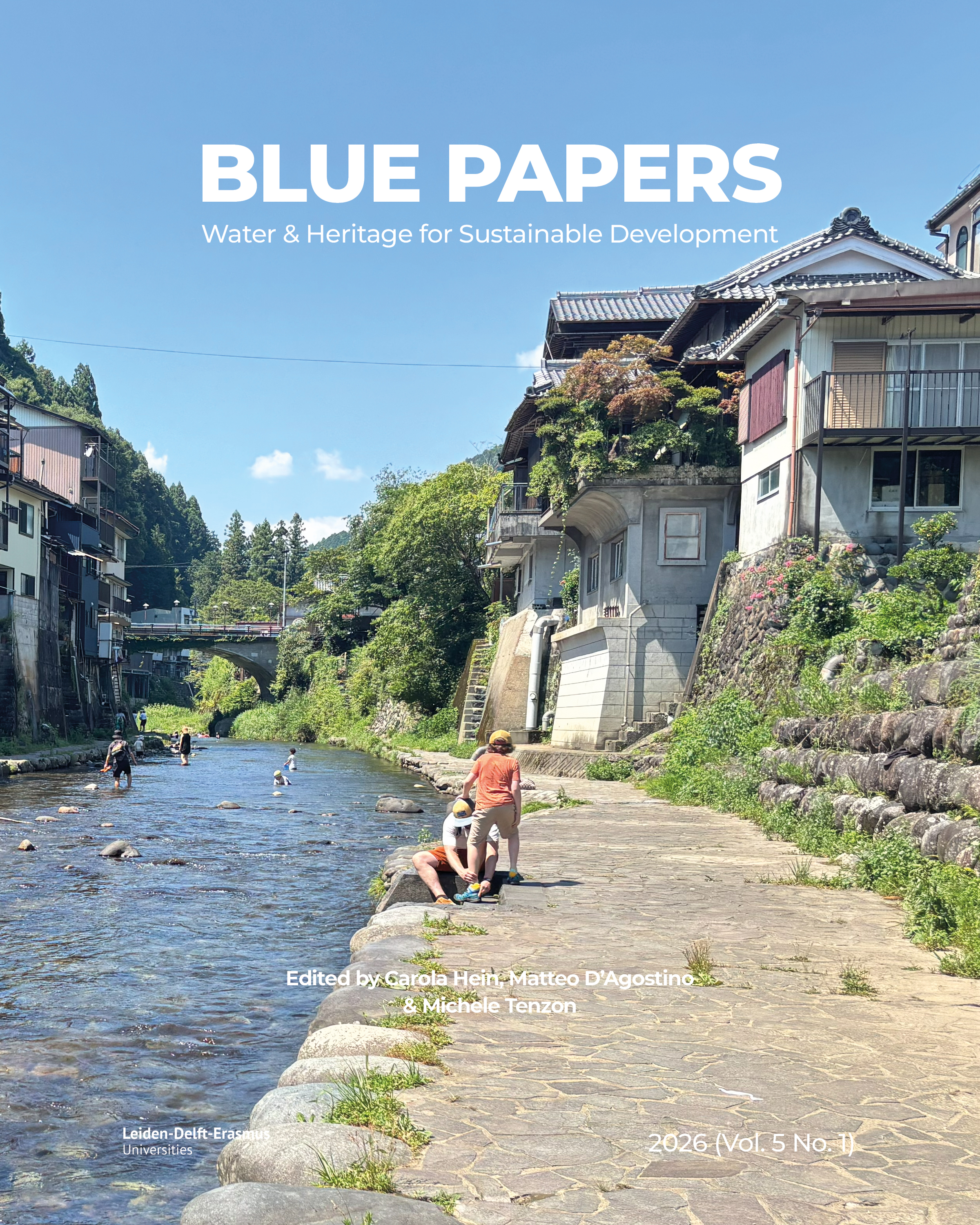
Water (in both its ‘fresh’ and ‘salty’ forms) shapes landscapes, societies, and cultures across time, linking ocean, rivers, coasts, and inland waters into a continuous and dynamic system. Managing water is therefore an inherently complex task, one that draws on long-standing practices while requiring new forms of knowledge and governance in response to climate change, environmental degradation, and growing social inequality. Whether as natural systems, engineered infrastructures, or cultural spaces, water environments embody collective memory and inherited relationships between people and their ‘liquid’ surroundings.
For much of history, communities have developed adaptive ways of living with water, informed by deep environmental knowledge and cultural practices tailored to local conditions. Over time, however, large-scale and centralized water management approaches, often driven by economic, political, or technological priorities, have reshaped these relationships. While such systems enabled development and security, they also over-simplified ecological processes and marginalized local knowledge, leaving enduring legacies that continue to influence vulnerability and resilience today.
International frameworks and global climate and disaster risk reduction agreements increasingly recognize the need for integrated approaches that connect freshwater and marine systems, science and society, and past experience and heritage with future action. These agendas call for governance models that are inclusive, adaptive, and grounded in place-based understanding, acknowledging that ocean sustainability depends on what happens upstream, and that heritage plays a key role in shaping how societies respond to change.
In this context, heritage is not only something to be preserved, but also a living resource for learning, adaptation, and transformation. Climate change challenges conventional approaches to conservation by introducing uncertainty, loss, and the need for continual adjustment. Responding to these pressures requires balancing continuity with change, technical expertise with cultural values, and centralized planning with community participation.