Downloads
DOI:
https://doi.org/10.58981/bluepapers.2026.2.15Published
Issue
Section
License
Copyright (c) 2025 Thomas Thiebault, Catherine Carré, Jérémy Jacob

This work is licensed under a Creative Commons Attribution 4.0 International License.
How to Cite
Keywords:
water quality, wastewater, chemical contamination, microbial contamination, participatory sciencesAbstract
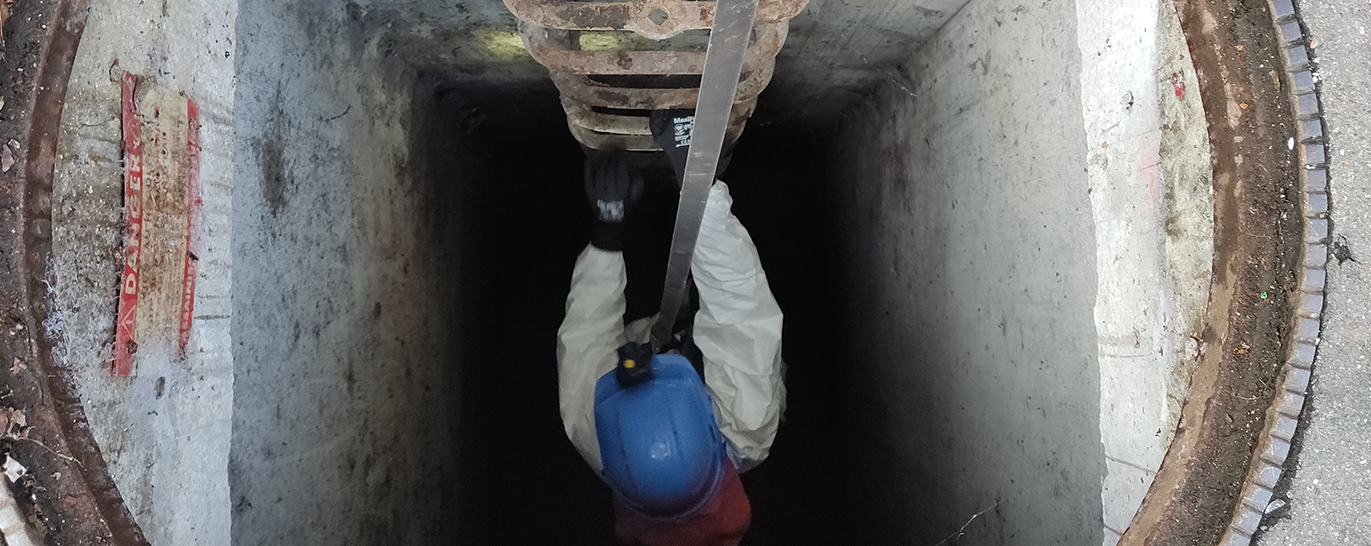
Aging urban wastewater infrastructure, often overlooked, can become a powerful lever for environmental and public health policy. Through the lens of the Parisian sewer system, this article highlights the growing pressures on sanitation networks – from combined sewer overflows to emerging chemical contaminants – and the limits of current treatment technologies. Yet, it also illustrates how wastewater can serve as a valuable resource. Initiatives like OBÉPINE have demonstrated the feasibility of wastewater-based epidemiology at scale, while participatory initiatives such as those performed in EGOUT show that citizen engagement and scientific monitoring can go hand in hand. Together, these efforts redefine wastewater as more than waste: It is a mirror of collective behavior, a platform for community science and a tool for decision-making. As cities face urgent climate and health challenges, this work calls for policies that reconnect people with infrastructure and invest in data-driven, inclusive approaches to urban sustainability.
References
Barles, Sabine. 2007. “Urban Metabolism and River Systems: An Historical Perspective: Paris and the Seine, 1790–1970.” Hydrology and Earth System Sciences 11 (6): 1757–69. https://doi.org/10.5194/hess-11-1757-2007.
Lucas, Françoise, Bernard de Gouvello, Jean-Marie Mouchel, Laurent Moulin, Pierre Servais and Sébastien Wurtzer. 2019. “The Microbiological Quality of the Seine River: Is It Compatible with Open Water Olympic Competitions?” In Hosting the Olympic Games: Uncertainty, Debates and Controversy, edited by Marie Delaplace and Pierre-Olaf Schut, 163–177. London: Routledge. https://doi.org/10.4324/9780429274695-10.
Petrie, Bruce. 2021. “A Review of Combined Sewer Overflows as a Source of Wastewater-Derived Emerging Contaminants in the Environment and Their Management.” Environmental Science and Pollution Research 28 (25): 32095–110. https://doi.org/10.1007/s11356-021-14103-1.
Soares, Ana. 2020. “Wastewater Treatment in 2050: Challenges Ahead and Future Vision in a European Context.” Environmental Science and Ecotechnology 2: 100030. https://doi.org/10.1016/j.ese.2020.100030.
Thiebault, Thomas, Catherine Carré, Gauthier Bernier-Turpin, Camille Asselin, Anne-Fleur Barfuss, Nada Caud and Jérémy Jacob. 2025. “Using Wastewater to Monitor Suggested Changes in Dietary Intake: A Participatory Experiment.” Journal of Urban Health 102 (4): 872–76. https://doi.org/10.1007/s11524-025-00992-x.
Wurtzer, S., P. Waldman, M. Levert, N. Cluzel, J. L. Almayrac, C. Charpentier, and S. Masnada et al. 2022. “SARS-CoV-2 Genome Quantification in Wastewaters at Regional and City Scale Allows Precise Monitoring of the Whole Outbreaks Dynamics and Variants Spreading in the Population.” Science of The Total Environment 810: 152213. https://doi.org/10.1016/j.scitotenv.2021.152213.


