Downloads
DOI:
https://doi.org/10.58981/bluepapers.2026.1.16Published
Issue
Section
License
Copyright (c) 2025 Mahendranath Sudhindranath, John Bosco Lourdusamy

This work is licensed under a Creative Commons Attribution 4.0 International License.
How to Cite
Keywords:
Great Flood of 1924, Kerala Flood 2018, colonialism, disaster history, resilienceAbstract
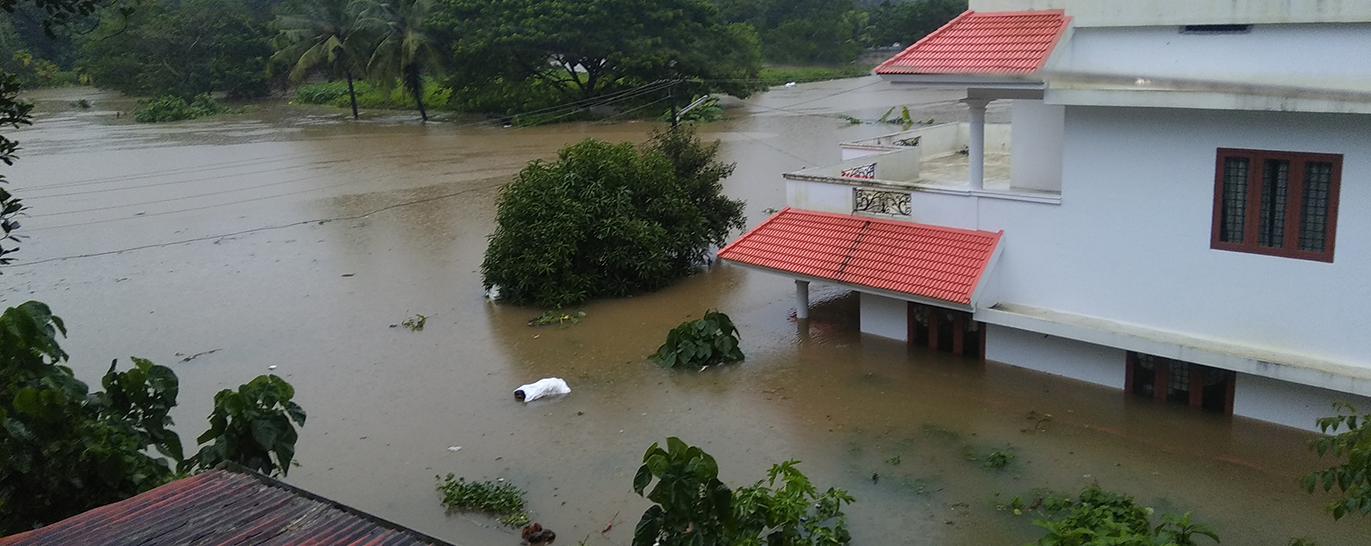
Floods impact many Sustainable Development Goals (SDGs) and aspects of sanitation and water supply. They are especially detrimental to those in lower socio-economic strata. The 2018 Kerala floods disrupted the lives of 5.4 million people, resulting in funds and attention being diverted from SDGs priorities and toward rebuilding and rehabilitation efforts. Such ravages of nature often result from the over-exploitation of local natural resources and the mismanagement of infrastructure. Colonialism was a watershed in such ecological destruction. The Great Flood of 1924, which devastated parts of present-day Kerala, is an example of a colonial-era-induced natural disaster. A century later, revisiting this disaster in the light of Kerala’s 2018 floods offers instructive pointers for achieving disaster resilience today – in a region known for its rich biodiversity and population density. This study also highlights how historical forces like colonialism contributed to transforming this once peripheral region into a “risk society.”
References
Baak, Paul Erik. 1997. Plantation Production and Political Power: Plantation Development in South-West India in a Long-Term Historical Perspective, 1743-1963. Oxford University Press.
Bankoff, Greg. 2003. Cultures of Disaster: Society and Natural Hazards in the Philippines. Routledge.
Basak, Samrat, Sahana Goswami, and Raj Bhagath Palanichamy. 2018. “Kerala Flooding: Natural Calamity or Manmade Disaster?” WRI India (blog). September 3, 2018. https://wri-india.org/blogs/kerala-flooding-natural-calamity-or-manmade-disaster.
Bavel, Bas van, Daniel R. Curtis, Jessica Dijkman, Matthew Hannaford, Maïka de Keyzer, Eline van Onacker, and Tim Soens. 2020. Disasters and History: The Vulnerability and Resilience of Past Societies. Cambridge University Press. https://doi.org/10.1017/9781108569743.
Carrigan, Anthony. 2015. “Towards a Postcolonial Disaster Studies.” In Global Ecologies and the Environmental Humanities: Postcolonial Approaches, edited by Elizabeth DeLoughrey, Jill Didur, and Anthony Carrigan. Routledge.
Chakrabarty, Dipesh. 2009. “The Climate of History: Four Theses.” Critical Inquiry vol. 35, no. 2: 197- 22. https://doi.org/10.1086/596640.
Gandy, Matthew. 2014. The Fabric of Space: Water, Modernity and the Urban Imagination. The MIT Press.
Hulme, Mike. 2008. “The Conquering of Climate: Discourses of Fear and Their Dissolution.” The Geographical Journal vol. 174, no.1: 5–16. https://doi.org/10.1111/j.1475-4959.2008.00266.x.
Jacob, Meenu. 2022. “Contextualising the Travancore Flood of 1924 Landscape Changes and State Policies.” PhD dissertation, Mahatma Gandhi University.
Mani, Sunil. 2021. “The Six Lessons from the Mega Floods of 2018 for Rebuild Kerala.”, in Building a New Kerala: Ideas and Reflections, Centre for Development Studies, Trivandrum. https://cds.edu/wp-content/uploads/2021/02/8_Six-Suggestions-Sunil-Mani.pdf.
Moench, Marcus. 1991. “Politics of Deforestation: Case Study of Cardamom Hills of Kerala.” Economic and Political Weekly vol. 26, no. 4: PE47–60.
Moore, Jason W., ed. 2016. Anthropocene or Capitalocene? Nature, History, and the Crisis of Capitalism. PM Press.
Pillai, T.K. Velu. 1940a. The Travancore State Manual Vol. I. Trivandrum: Government of Travancore.
———. 1940b. The Travancore State Manual Vol. III. Trivandrum: Government of Travancore.
Ramaswamy, C. 1985. Review of Floods in India During the Past 75 Years. Indian National Science Academy.
Ravi Raman, K. 2010. Global Capital and Peripheral Labour: The History and Political Economy of Plantation Workers in India. Routledge.
Robinson, S. C. H. (12 August 1924). [Correspondence of the Land Revenue and Income Tax Commissioner to the Chief Secretary of Travancore]. Circuit Diary of Flood Relief Special Officer (File No. 509/25 Vol. 6, Batch No. 216). Kerala State Archives, Trivandrum.
Skilton, Liz. 2023. “The Myth of the 100-Year Flood: The Language of Risk and the 2016 Louisiana Floods.” In Rethinking American Disasters, edited by Cynthia A. Kierner, Matthew Mulcahy, and Liz Skilton. Louisiana State University Press.
Venkatesh, Shreeshan, and Rejimon Kuttappan. 2018. “This Is Why Kerala Floods Were the Worst in a Century.” Down to Earth, September 12, 2018, sec. Climate Change. https://www.downtoearth.org.in/coverage/climate-change/this-is-why-kerala-floods-were-the-worst-in-a-c entury-61491.
Viju, B. 2019. Flood and Fury: Ecological Devastation in the Western Ghats. Ebury Press.


