Downloads
DOI:
https://doi.org/10.58981/bluepapers.2026.1.03Published
Issue
Section
License
Copyright (c) 2025 Rizki Dwika Aprilian, Ricky Purbaya, Miktha Farid Alkadri

This work is licensed under a Creative Commons Attribution 4.0 International License.
How to Cite
Keywords:
heritage management, harbormaster, Syahbandar, Spice Route, JavaAbstract
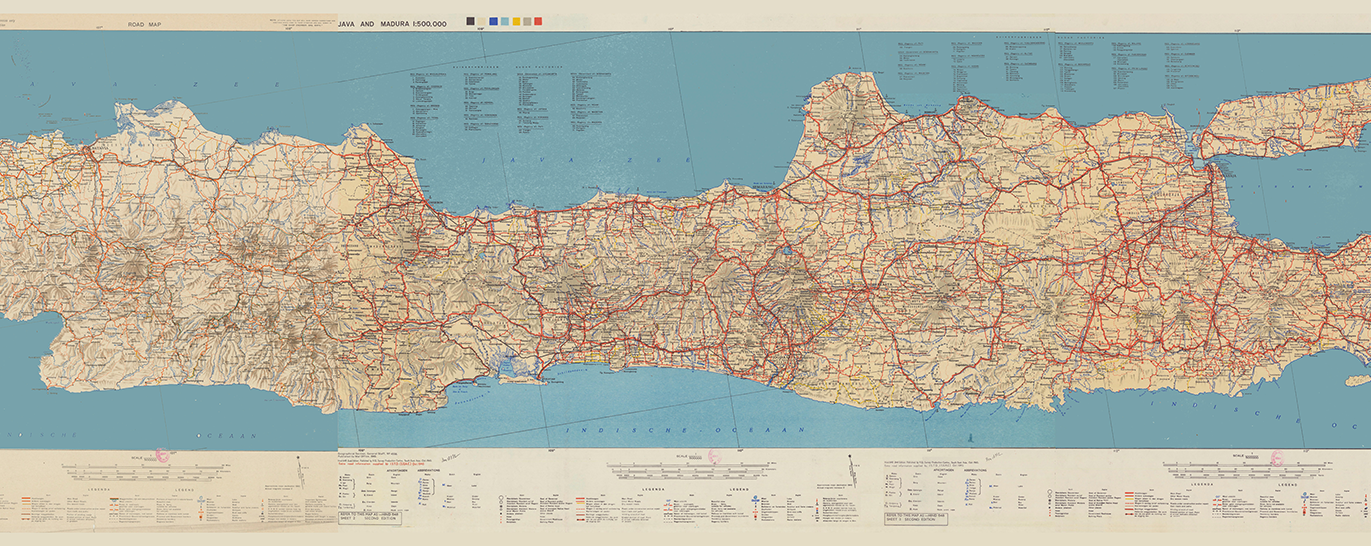
For centuries, Java played a pivotal role in the global shipping trade, connecting the spice islands with the Western world. Its northern coastline was home to three major port cities: Batavia (now Jakarta), Surabaya and Semarang, where trade was overseen by the syahbandar or harbormaster– a position dating from pre-colonial times. This role existed throughout the colonial era, when masonry towers with timber floors were constructed for harbormasters to manage port activities. Although revitalization efforts have emerged since the first decade of the twenty-first century, these towers have now been largely forgotten due to port relocations, land subsidence, sea-level rise and changes in ownership. Drawing on archival research and observation, this article examines how historic harbormaster towers in Java’s three major port cities are being preserved amid climate change challenges.
References
Andaya, Barbara Watson. 1978. “The Indian Saudagar Raja (The King’s Merchant) in Traditional Malay Courts.” Journal of the Malaysian Branch of the Royal Asiatic Society 51 (1): 12–35. http://www.jstor.org/stable/41492184.
Basundoro, Purnawan, and Andri Setyo Nugroho. 2022. Peran Jawa (Bagian) Timur dalam Jaringan Jalur Rempah sejak Periode Kuno sampai Abad ke-18 [The Role of East Java in the Spice Route Network from the Ancient Period to the 18th Century]. Jakarta: Kementerian Pendidikan, Kebudayaan, Riset, dan Teknologi.
Dick, Howard. 2022. “Water World to Inundation: River Cities in Southeast Asia, from Old to New Millennium.” In River Cities in Asia: Waterways in Urban Development and History, edited by Rita Padawangi, Paul Rabé, and Adrian Perkasa, 37–56. Amsterdam: Amsterdam University Press. https://doi.org/10.2307/j.ctv31nzkv6.5.
Directorate of History and Cultural Values. 2013. Atlas Pelabuhan-Pelabuhan Bersejarah di Indonesia [Atlas of Historic Ports in Indonesia]. Jakarta: Directorate of History and Cultural Values, Directorate General of Culture, Ministry of Education and Culture.
Kooria, Mahmood. 2019. “Languages of Law: Islamic Legal Cosmopolis and its Arabic and Malay Microcosmoi.” Journal of the Royal Asiatic Society, 29. https://doi.org/10.1017/S1356186319000191.
Masyhudi. 2018. “Alur Kedatangan Etnis Arab di Jawa” [The Arrival of Arabs in Java]. In Warisan Budaya Maritim Nusantara: Kumpulan Makalah Pertemuan Ilmiah Arkeologi (PIA) XIV [Maritime Cultural Heritage of the Archipelago – Collection of Papers from the 14th Scientific Meeting on Archaeology (PIA)], 82–97. Jakarta: Kementerian Pendidikan dan Kebudayaan.
Moreland, William Harrison. 1920. “The Shahbandar in the Eastern Seas.” Journal of the Royal Asiatic Society of Great Britain and Ireland 1920 (4): 517–33. http://www.jstor.org/stable/25209656.
Nas, Peter J. M., and Kees Grijns. 2007. “Jakarta-Batavia, Sebuah Sampel Penelitian Sosio-Historis Mutakhir” [Jakarta-Batavia, a Sample of Recent Socio-Historical Research]. In Jakarta-Batavia: Esai Sosio-Kultural [Jakarta-Batavia: Socio-Cultural Essays]. Leiden: KITLV Press & Banana.
Pires, Tomé. 2015. Suma Oriental: Karya Tomé Pires: Perjalanan dari Laut Merah ke China dan Buku Francisco Rodrigues. Edited by Armando Cortesão. Yogyakarta: Penerbit Ombak.
Ricklefs, Merle Calvin. 2008. Sejarah Indonesia Modern 1200–2008 [A History of Modern Indonesia since c. 1200]. Jakarta: Penerbit Serambi.
Sundari, Ekowati. 2018. “Tinjauan Awal keramik dari Situs Pasar Ikan dalam Jalur Maritim.” Warisan Budaya Maritim Nusantara - Kumpulan Makalah Pertemuan Ilmiah Arkeologi (PIA) XIV [Preliminary Review of Ceramics from the Fish Market Site in the Maritime Route - Maritime Cultural Heritage of the Archipelago - Collection of Papers from the XIV Scientific Archaeology Meeting (PIA)]. Kementerian Pendidikan, Kebudayaan, Riset, Teknologi.
Soedarsono, Woerjantari. 2011. Pelestarian Kota Tua di Indonesia. Jakarta: Direktorat Cagar Budaya Bawah Air dan Masa Kolonial.
Van der Brug, Peter H. 2007. “Batavia yang Tidak Sehat dan Kemerosotan VOC pada Abad Kedelapan Belas.” In Jakarta-Batavia: Esai Sosio-Kultural. Leiden: KITLV Press & Banana.
Zuhdi, Susanto. 2014. Nasionalisme, Laut, dan Sejarah. Jakarta: Komunitas Bambu.


