Downloads
DOI:
https://doi.org/10.58981/bluepapers.2026.1.01Published
Issue
Section
License
Copyright (c) 2025 Elyze Storms-Smeets

This work is licensed under a Creative Commons Attribution 4.0 International License.
How to Cite
Keywords:
drought, floods, country houses, estate landscapes, heritageAbstract
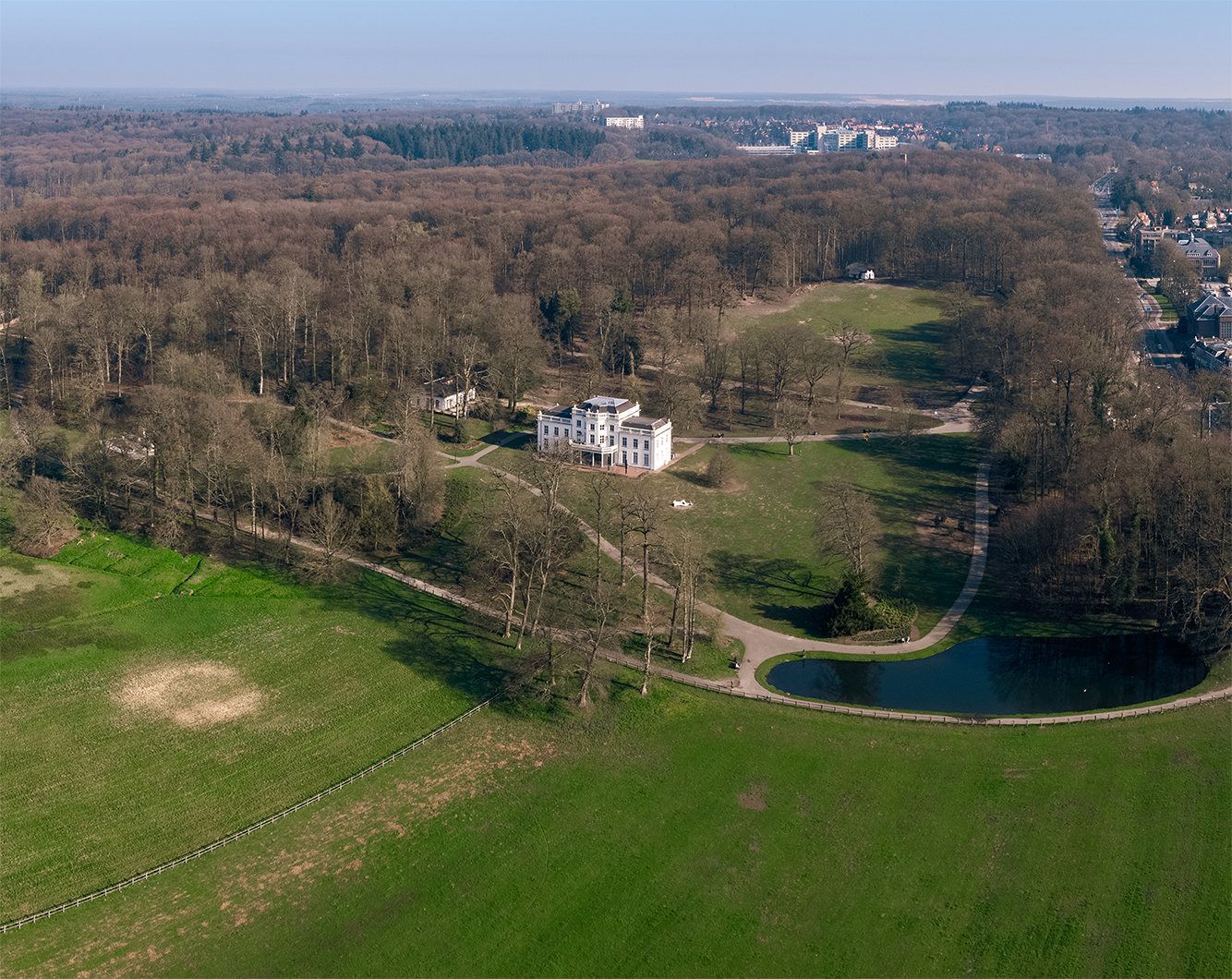
In the Netherlands, climate change has brought longer periods of drought alongside short periods of more intense rain, prompting planning and heritage professionals to explore new approaches to water management. One promising method is “learning from the past.” Landscape history studies can reveal continuity and change in hydrological practices, offering knowledge, inspiration and potential solutions to today’s water challenges. But what does it mean to learn from the past? Historic knowledge must go beyond simply identifying historic water structures in the landscape. This article focuses on country estates, analyzing these heritage sites as spatial and social ensembles in wider landscape systems. Tracing how water shaped the establishment and development of country houses and estates reveals important dynamics and principles. This deeper understanding of the historical geographical dynamics of water use can help present-day estate owners, governments and spatial planners foster more resilient estate landscapes.
References
Caljé, Pieter, and Nico Randeraad. 2025. De Maas in Limburg. Een historisch rivierlandschap in beweging. Maaslandse Monografieën 87. Koninklijke LGOG.
Dessing, René W. Chr., and Jan Holwerda, eds. 2024. Nationale gids Historische Buitenplaatsen. Wormer: Stichting Uitgeverij Noord-Holland.
Hartman, P. 2019. “Droogte is een sluipmoordenaar, het is rampzalig als we niets doen.” De Gelderlander, July 27.
Hein, Carola, Matteo D’Agostino, Carlien Donkor, Queenie Lin and Hilde Sennema. 2022. “Capturing Water, Culture and Heritage through Icons: A First Attempt.” Blue Papers 1 (1): 1–3. https://doi.org/10.58981/bluepapers.2022.1.wcht.
Hein, Carola, Lea Kayrouz, Zuzanna Sliwinska, and Matteo D’Agostino. 2025. “A Taxonomy of Water Practices, Functions and Values across Space and Time: Water Icons 2.0.” Blue Papers 4 (1): 14–25.
Historic Environment Forum. 2021. Heritage Responds - Taking Positive Action on Climate Change. Historic Environment Forum. https://wmf-production.nyc3.digitaloceanspaces.com/documents/2a_hef-heritage-responds-report.pdf.
Hupperetz, Wim, Ben Olde Meierink, and Ronald Rommes, eds. 2005. Kastelen in Limburg. Burchten en landhuizen (1000–1800). Utrecht: Matrijs.
Inspectie Overheidsinformatie en Erfgoed. 2020. Aanhoudend droog. Inventariserend onderzoek naar de gevolgen van droogte op groene rijksmonumenten. Ministerie van Onderwijs, Cultuur en Wetenschap.
Janssen, Joks, and Marijn van Asseldonk. 2023. “From Fast Forward to Past Forward: The Importance of a Heritage-Based Planning Approach in Tackling Drought and Water Scarcity in the Sandy Areas of the Netherlands.” InPlanning. https://www.inplanning.eu/wpcontent/uploads/TIP_ESSAY_5_Janssen_vanAsseldonk.pdf.
Jas, Jorien, ed. 2013. Kastelen in Gelderland. Utrecht: Matrijs.
Kolen, Jan. 2022. “Naar een nieuw kantelpunt in de omgang met de rivier: een nieuwe aanpak en nieuwe idealen.” Presentation at River Maas conference, Historisch rivierlandschap met toekomst (June 30).
Morató, Jordi, José Luis Martín, and Olga Lucia Sánchez. 2025. “Ancient Hydro-Technologies as a Response to Climate and Food Emergencies: Use of Cultural Heritage to Rescue the Future.” Blue Papers 4 (1): 44–53. https://doi.org/10.58981/bluepapers.2025.1.04.
Nijhuis, Steffen, Paul Thissen, and Elyze Storms-Smeets. 2023. Resilient Estate Landscapes Gelderland. Past, Present, Future. Prinsenbeek: Jap Sam Books.
Nijhuis, Steffen, Paul Thissen, and Elyze Storms-Smeets. 2021. “Designing Resilient Heritage Landscapes: A Landscape-based Regional Design Approach for the Preservation and Development of Historical Estate Landscapes.” Landscape Architecture (Fengjing Yuanlin) 28 (11): 15–32.
Provincie Gelderland. 2022. “Baakse Beek klimaatrobuust dankzij herstel natuurlijk watersysteem.” Nature Today, December 16. https://www.naturetoday.com/intl/nl/nature-reports/message/?msg=30149.
Storms-Smeets, Elyze. 2021. “De sociale geografie van het buitenplaatslandschap Gelders Arcadië.” Bulletin KNOB 120 (4): 33–46.
Storms-Smeets, Elyze. 2023. “Leren denken in ensembles. Toekomst voor Limburgse landgoederen.” Het Buiten. Kastelen, buitenplaatsen en hun bewoners (14): 18–25.
Tomescu, Alina, Roosa Hakkarainen, Sylvie van Damme, Bert De Roo, and Elyze Storms-Smeets. 2021. “European Project Innocastle Introduces a Landscape-Based Approach to Heritage.” Journal of European Landscapes 2 (1): 21–25. https://doi.org/10.5117/JEL.2021.2.68322.
Van Paassen, Daphne. 2022. “Niemand is tegen erfgoed. Monumenten in de strijd tegen klimaatverandering.” De Groene Amsterdammer (12), March 23. https://www.groene.nl/artikel/niemand-is-tegen-erfgoed.
Vreenegoor, Ellen, and Menne Kosian. 2022. “Using Cultural Heritage and Historical Analyses for Current and Future Problems with Too Much or Too Little Water.” Internet Archaeology 60. https://doi.org/10.11141/ia.60.6.


