Downloads
DOI:
https://doi.org/10.58981/bluepapers.2025.2.11Published
Issue
Section
License
Copyright (c) 2025 Maria Carmela Grano

This work is licensed under a Creative Commons Attribution 4.0 International License.
How to Cite
Keywords:
UNESCO World Heritage, climate adaptation, regenerative development, clean energy, landscape managementAbstract
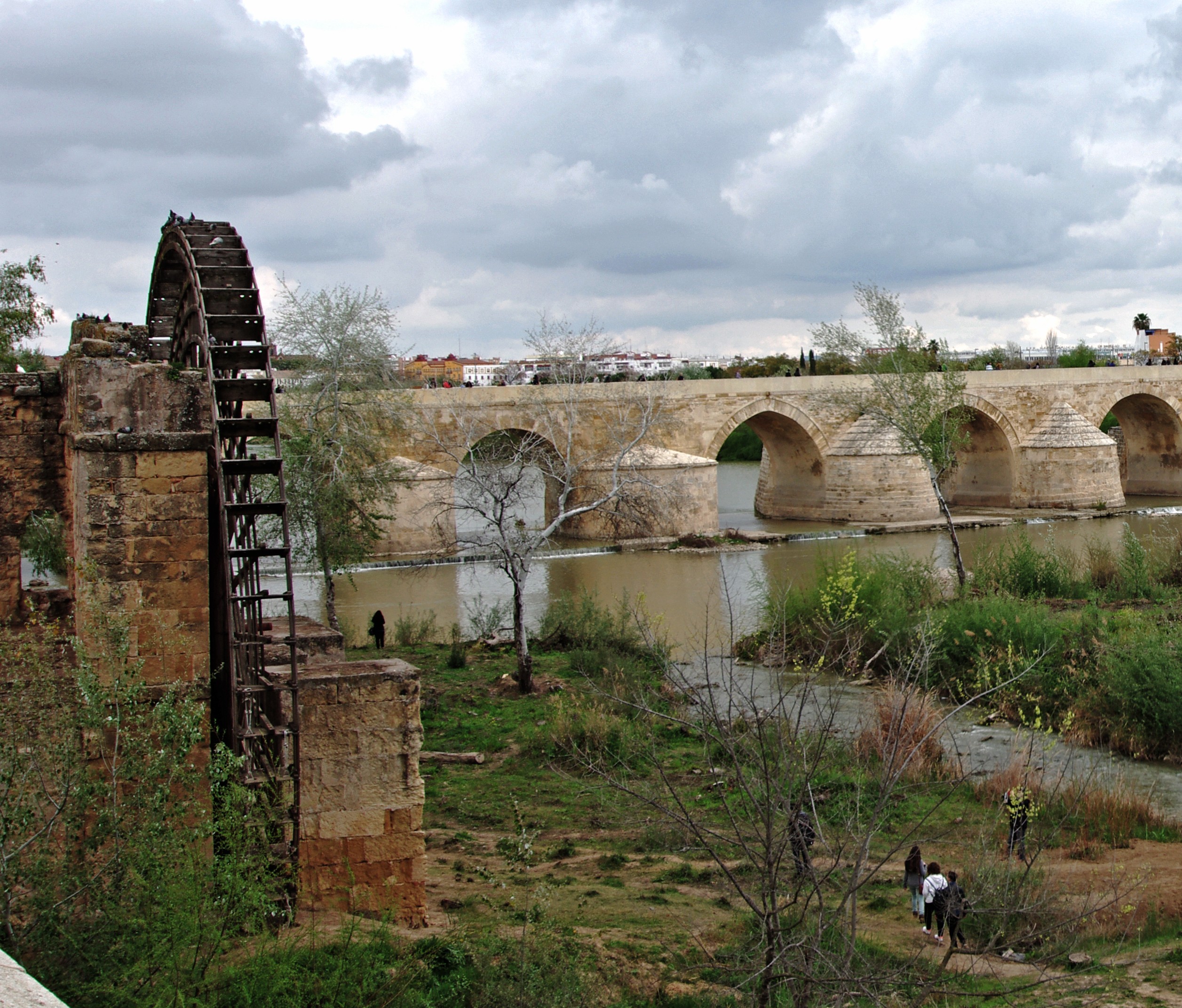
Watermills are not remnants of obsolete technologies but dynamic socio-ecological systems in which hydrology, craftsman ship, landscape processes and community knowledge have coevolved for centuries. Although mills appear in many UNESCO World Heritage and Intangible Heritage inscriptions, their ecological functions and climate-adaptation potential remain largely underrecognized. This article demonstrates how historic mill infrastructures – by regulating flow, managing sediment, supporting biodiversity and generating low-impact energy – embody long-standing forms of water governance that anticipate today’s nature-based solutions. Drawing on recent evidence, the article shows that active or revived milling practices strengthen landscape resilience, whereas abandoned mills deteriorate rapidly under climate stress, amplifying environmental risks.
References
AIAMS (Associazione Italiana Amici dei Mulini Storici). 2024. “Archivio dei mulini storici italiani.” https://aiams.eu.
Barceló, Miquel. 2004. “The Missing Water-Mill: A Question of Technological Diffusion in the High Middle Ages.” In The Making of Feudal Agricultures, edited by Miquel Barceló and François Sigaut, 255–314. Leiden and Boston: Brill.
Bishop, Paul, and Esperanza Muñoz-Salinas. 2013. “Tectonics, Geomorphology and Water Mill Location in Scotland, and the Potential Impacts of Mill Dam Failure.” Applied Geography 42: 195–205. https://www.sciencedirect.com/science/article/pii/S0143622813001069.
Brykała, Dariusz, and Zbigniew Podgórski. 2020. “Evolution of Landscapes Influenced by Watermills, Based on Examples from Northern Poland.” Landscape and Urban Planning 198: 103798. https://doi.org/10.1016/j.landurbplan.2020.103798.
CAG (Centre for Agrarian History) and DCIH (Dutch Centre for Intangible Heritage). 2023. The Power of Watermill Landscapes for a Climate-Resilient Future. Centre for Agrarian History.
de Mars, Hans, and Hans Bleumink. 2023. “Het Dommeldal: een eeuwenoude cascade van watermolenlandschappen.” In Het Stroomgebied van de Dommel, een landschapsbiografie, edited by Van den Oetelaer et al., Deel I. Woudrichem.
Dodd, Jamie, Jon Bolland, and Ian Cowx. 2018. “Balancing River Ecosystem Health and Hydropower Generation: The Development of an Evidence-Based Framework for Assessing Fish Passage.” Ecohydrology 11 (6): e1974.
Downward, Stuart, and Kevin Skinner. 2005. “Working Rivers: The Geomorphological Legacy of English Freshwater Mills.” Area 37 (2): 138–47. https://doi.org/10.1111/j.1475-4762.2005.00616.x.
Genovese, Laura, et al. 2024. “Cooperation Solutions for the Local Sustainable Development of Heritage Communities: Role and Contributions of the Faro Italia Network.” In Networks, Markets & People (NMP 2024) – Lecture Notes in Networks and Systems vol. 1184, 340–53. Springer. https://doi.org/10.1007/978-3-031-74608-6_33.
Grano, Maria C. 2025. “Historic Water Mills as Regenerative Ecosystems: Integrating Technologies, Community Engagement, and Sustainable Landscape Management.” Cities 162: 105982. https://doi.org/10.1016/j.cities.2025.105982.
Grano, Maria C., and Paul Bishop. 2017. “‘Barcelò’s Missing Water Mills’ and Scottish and Southern Italian Horizontal Mills.” Vernacular Buildings 40: 109–122.
Grano, Maria C., Maurizio Del Monte, Maurizio Lazzari and Paul Bishop. 2016. “Fluvial Dynamics and Water Mills Location in Basilicata (Southern Italy).” Geografia Fisica e Dinamica Quaternaria 39 (2): 149–60. https://doi.org/10.4461/GFDQ.2016.39.14.
Hernández-Morcillo, Mónica, Tobias Plieninger and Claudia Bieling. 2022. “An Integrated Framework for Assessing Biocultural Ecosystem Services.” People and Nature 4 (3): 521–38. https://doi.org/10.1002/pan3.10283.
Jackson, Ian. 2024. “Waterpower in the Derbyshire Derwent Catchment: Learning from the Past to Unlock Hydropower Potential,” PhD diss., University of Nottingham.
Kirchner, Helena. 2011. “Watermills in the Balearic Islands during the Muslim Period.” In Food in the Medieval Rural Environment: Processing, Storage, Distribution of Food (Ruralia VII, 7–12 September 2009, Lorca, Spain), 45–55. Brepols.
Quaranta, Emanuele, and Christian Wolter. 2021. “Sustainability Assessment of Hydropower Water Wheels with Downstream Migrating Fish and Blade Strike Modelling.” Sustainable Energy Technologies and Assessments 43: 100943. https://doi.org/10.1016/j.seta.2020.100943.
Quaranta, Emanuele, Anton J. Schleiss and Carlo De Michele. 2020. “The Ecological Impact of Historical Watermills on European Rivers: Re-evaluating Their Role in Light of Modern Restoration Policies.” Journal of Environmental Management 276: 111285.
Quaranta, Emanuele, Toni Pujol and Maria C. Grano. 2023. “The Repowering of Vertical Axis Water Mills Preserving Their Cultural Heritage: Techno-Economic Analysis with Water Wheels and Turgo Turbines.” Journal of Cultural Heritage Management and Sustainable Development. https://doi.org/10.1108/JCHMSD-03-2021-0040.
TIMS (The International Molinological Society). 2023. “Resources.” https://www.molinology.org.
UNESCO. 2023. “World Heritage & Sustainable Development Policy / Water & Heritage Initiatives.” https://whc.unesco.org/en/sustainabledevelopment/; https://whc.unesco.org/en/waterandheritage/.


