Downloads
DOI:
https://doi.org/10.58981/bluepapers.2025.2.09Published
Issue
Section
License
Copyright (c) 2025 Manuela Armenat, Christian Bellak, Andreas Lange

This work is licensed under a Creative Commons Attribution 4.0 International License.
How to Cite
Keywords:
UNESCO World Heritage, energy, recreation and tourism, mining history, integrated managementAbstract
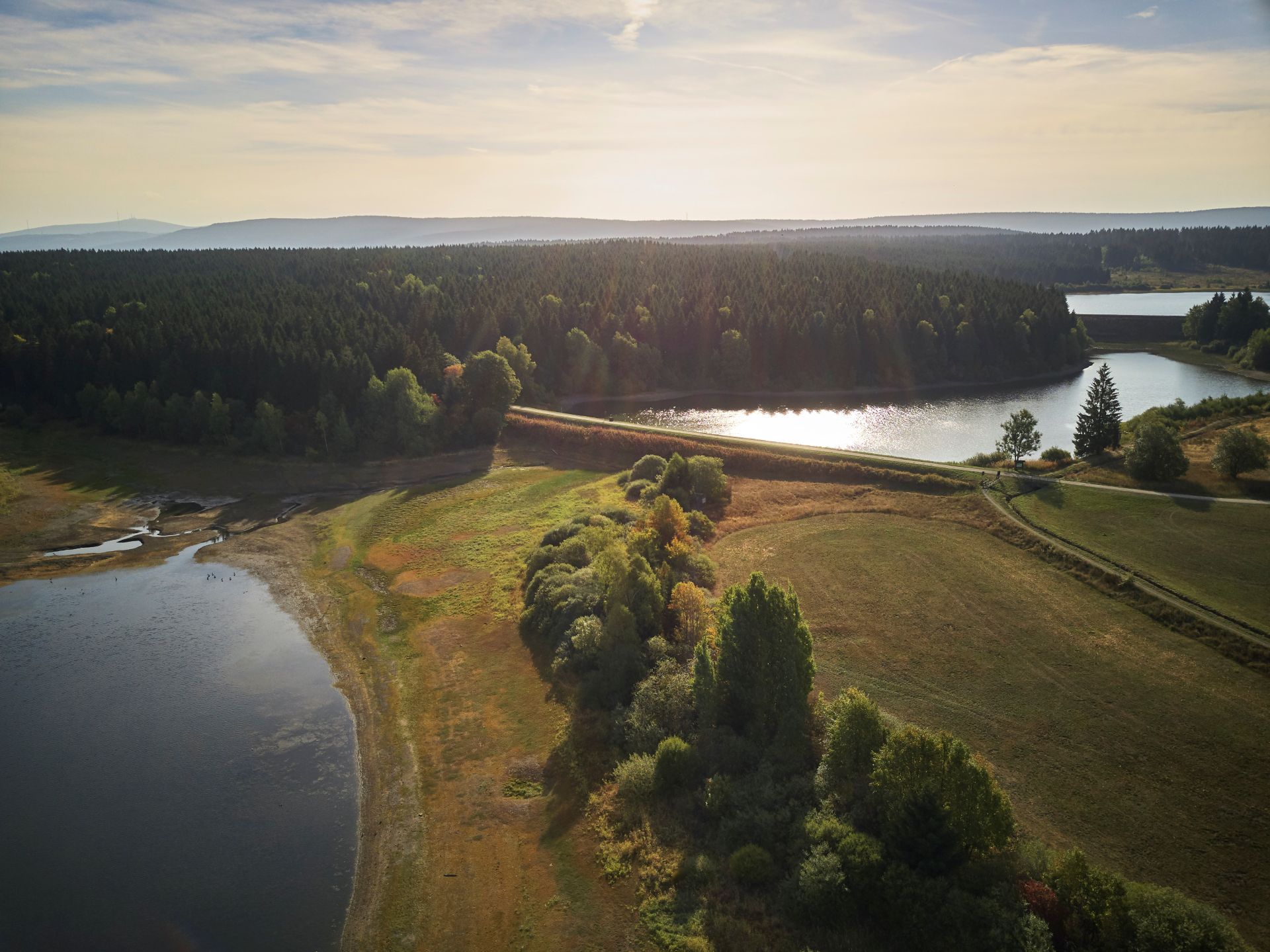
The Upper Harz Water Management System is an outstanding example of effective water management over the centuries. Through historical development and adaptive change over centuries, a multifunctional system has evolved that remains in active use today. Since the site’s UNESCO designation as a World Heritage property in 2010, continuous monitoring and maintenance have been integral to its management. In recent years, challenges arising from climate change and safety-related hydraulic engineering issues, as well as financial constraints, have put the monument under increasing pressure. With the common goal of ensuring that the historic elements and their operation continue to contribute to a wide range of Sustainable Development Goals (SDGs) and provide essential public services in the future, changes are necessary. World Heritage management that incorporates the importance of water management is therefore essential, just as, conversely, the World Heritage and the monument play a supporting role and basis for the management of water in the Upper Harz Water Management System.
References
Armenat, Manuela. 2022. “UNESCO-Welterbe im Harz in Zeiten des Klimawandels.” Berichte zur Denkmalpflege in Niedersachsen 42 (2). Edited by Niedersächsisches Landesamt für Denkmalpflege.
Deutscher Wetterdienst. 2022. Zeitreihen und Trends 1881-2024. Accessed January 22, 2025. www.dwd.de/DE/leistungen/zeitreihen/zeitreihen.html.
Dumreicher, Alfred. 1866. Profilriß der Oberharzer Wasserwirtschaft. HSTAH BaCl Rissarchiv No. 996-2. Niedersächsisches Hauptstaatsarchiv Hannover, Hanover, Germany.
Harzwasserwerke GmbH. 2011. UNESCO-Welterbe Oberharzer Wasserwirtschaft. Das Oberharzer Wasserregal. Das bedeutendste vorindustrielle Energiegewinnungs- und Energieversorgungssystem der Welt. Broschüre 24 Seiten. Accessed January 22, 2025.https://www.harzwasserwerke.de/wp-content/uploads/2023/10/unesco-welterbe-oberharzer-wasserwirtschaft-1.pdf.
Harzwasserwerke GmbH. 2019. Wasserwirtschaft im Westharz. Hydrologische Untersuchungen mit Blick auf ein sich veränderndes Klima. Accessed January 22, 2025. https://www.harzwasserwerke.de/wp-content/uploads/2023/10/Wasserwirtschaft_im_Westharz_1941-2018.pdf.
Malek-Custodis, Katharina. 2022. “Wasser Marsch! Mehr Kraft für mehr Tiefe.” Bergbau durch die Jahrtausende. Montanarchäologie in Deutschland (January 2022).
LAVES (Lower Saxony State Office for Consumer Protection and Food Safety). 2011. “Vollzugshinweise zum Schutz von Wirbellosenarten in Niedersachsen. – Wirbellosenarten des Anhangs V der FFH-Richtlinie mit Priorität für Erhaltungs- und Entwicklungsmaßnahmen – Edelkrebs (Astacus astacus)” – Niedersächsische Strategie zum Arten- und Biotopschutz.
UNESCO. 2010. Mines of Rammelsberg, Historic Town of Goslar and Upper Harz Water Management System (Nomination File 623ter). Paris: UNESCO World Heritage Centre. Accessed January 22, 2025. https://whc.unesco.org/uploads/nominations/623ter.pdf.
Schrader, Dirk, Thomas Herberger and Christian Kiechle. 2023. “Oberflächenwasseraufbereitung im Harz – Fallstudie Clausthal-Zellerfeld.” energie | wasser-praxis (Sepember 2023).


